












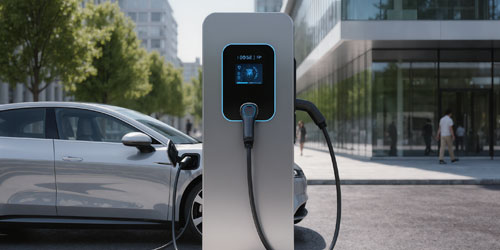
Electric vehicles promise lower maintenance and a smoother ride, but for a growing number of owners, the battery and charging system — the most expensive and important components in the car — have become the source of constant frustration. From sudden range loss to vehicles that refuse to charge at all, EV battery and charging defects are now one of the fastest-growing categories of lemon law claims. Here’s what’s going wrong, which brands and models are most affected, and how owners can qualify for lemon law protection.
Common EV Battery and Charging Problems
EV defects tend to fall into a few recurring categories:
Premature battery degradation. All EV batteries lose some capacity over time, but a defective battery loses range far faster than the manufacturer’s specifications allow — sometimes dropping well below advertised range within the first few years of ownership.
Total battery failure. Some owners report a warning light and a sudden drop into “limp mode” or “turtle mode,” which severely restricts speed and power, followed by a full high-voltage battery replacement — occasionally within the first year or two of ownership.
Charging failures. This includes vehicles that won’t initiate a charge at all, charging sessions that cut off abruptly, errors specific to DC fast-charging, incompatibility with certain public charging stations, and failures in the onboard charging hardware itself.
Battery fire risk and recalls. In several high-profile cases, manufacturing defects in battery cells or modules have created a fire risk serious enough to trigger full battery-pack recalls and replacements.
Charging component failures. On some newer EV platforms, the integrated charging control unit (ICCU) — the component that manages both AC and DC charging — has been a specific point of failure, alongside 12-volt battery drain issues that can leave a vehicle unable to start even when the main battery has charge.
Thermal management defects. Problems with the battery cooling system can worsen degradation and, in rare cases, contribute to overheating.
Brands and Models With Reported Battery and Charging Issues
Battery and charging defects have surfaced across nearly every major EV manufacturer. Some of the most frequently cited models include:
- Chevrolet Bolt EV / Bolt EUV – High-voltage battery fire risk led General Motors to recall all Bolt models sold since 2017, resulting in full battery pack replacements for many owners.
- Hyundai Kona Electric – A similar fire-risk battery recall affected roughly 90,000 Kona EVs.
- Hyundai Ioniq 5 / Ioniq 6 and Kia EV6 – Owners have reported 12-volt battery drain and integrated charging control unit (ICCU) failures that can disable charging entirely.
- Ford Mustang Mach-E – A battery contactor defect prompted a recall after some vehicles lost high-voltage power unexpectedly; owners have also reported charging system glitches.
- Ford F-150 Lightning – Reports of charging software integration issues and inconsistent charging speeds.
- Tesla Model S, 3, X, and Y – Battery degradation complaints, along with charging errors and, in some cases, drive-unit and battery replacements.
- Nissan LEAF – Owners have reported sudden high-voltage battery failure, including the vehicle entering “turtle mode” while driving.
- Rivian R1T and R1S – Charging inconsistencies and software-related battery management issues as production has scaled.
- Polestar 2 – Battery contactor issues that have prompted recalls.
- BMW i4 and iX – Reported charging failures and related software glitches.
- Volkswagen ID.4, Chevrolet Equinox EV, Lucid Air – Charging and range-related complaints have also been reported on these newer EV platforms.
This isn’t an exhaustive list — because the high-voltage battery and charging system are common to virtually every electric vehicle, defects in these systems can and do appear across the entire EV market, regardless of brand.
How EV Battery and Charging Defects Qualify for Lemon Law
Electric vehicles are covered by state lemon laws the same way gas-powered cars are. In California, for example, the Song-Beverly Consumer Warranty Act applies fully to EVs. To qualify, an owner generally needs to show:
- A substantial defect covered by warranty. Abnormal battery degradation, a failed high-voltage battery, or a charging system that doesn’t work as intended can all qualify — as long as the defect significantly impairs the vehicle’s use, value, or safety.
- A reasonable number of repair attempts. This is typically around two attempts for a safety-related defect (such as a fire-risk battery or sudden loss of power) and up to four attempts for other substantial defects, though this varies by state.
- The defect must occur during the warranty period. EVs typically carry two overlapping warranties: a standard new-vehicle warranty (often 3 years/36,000 miles) and a separate, longer battery warranty mandated at the federal level (commonly 8 years/100,000 miles). A battery or charging defect that shows up within either warranty period can support a claim.
A few things make EV battery and charging cases distinctive compared to traditional lemon law claims:
- Objective data works in the owner’s favor. Range figures, charging speed, and battery capacity percentages are measurable, which can make it easier to document a defect compared to something more subjective like an engine noise.
- Recalls can strengthen a claim. A vehicle that’s already subject to a battery-related recall — like the Bolt EV or Kona Electric — doesn’t automatically qualify as a lemon, but a recall combined with failed repair attempts is strong supporting evidence.
- Manufacturers sometimes argue software updates “reset” the repair count. Some automakers claim an over-the-air update resolved the underlying issue, even when the same problem returns. Keeping detailed records of every recurrence helps counter this argument.
- High repair costs increase settlement pressure. Battery and charging system repairs can run anywhere from several thousand dollars to $15,000–$30,000 or more, which often gives manufacturers a strong incentive to settle rather than continue attempting repairs.
What to Do If Your EV Has Battery or Charging Problems
- Report every issue to an authorized dealer or service center and get a written repair order each time, even if the problem seems minor.
- Track your range and charging performance over time — screenshots of your dashboard range display, charging session logs, and any error codes help establish a pattern.
- Save all OTA update notifications so you can show whether a “fix” actually resolved the issue or whether the defect returned.
- Don’t wait too long between repair visits — most lemon laws have filing deadlines tied to the warranty period or vehicle age.
- Talk to a lemon law attorney who has experience with EV-specific defects. Because battery and charging systems are newer territory for lemon law claims, an attorney familiar with EV service records and manufacturer arbitration programs can make a meaningful difference in outcome.
Bottom Line
Battery degradation, sudden battery failure, and charging system defects are now among the most common reasons EV owners pursue lemon law claims — and the problem spans the entire industry, from mainstream models like the Chevy Bolt and Nissan LEAF to premium brands like Tesla, Rivian, and BMW. If your EV won’t charge reliably, has lost significant range, or has needed a battery replacement or repeated repairs, your vehicle may qualify for a lemon law buyback, replacement, or cash settlement.
Frequently Asked Questions About EV Battery and Charging Lemon Law Claims
- Are electric vehicles covered under lemon law the same way gas cars are? Yes. In most states, including California, lemon laws apply to EVs just as they do to traditional vehicles. A substantial defect covered by warranty — including battery and charging problems — that can’t be fixed after a reasonable number of repair attempts can qualify the vehicle as a lemon.
- How much battery degradation is considered a defect rather than normal wear? There’s no single universal threshold, but range loss that significantly exceeds the manufacturer’s own specifications — for example, well beyond what’s expected within the first few years of ownership — is generally treated as abnormal and can support a lemon law claim, especially when documented with range and charging data over time.
- Does a battery recall automatically make my EV a lemon? Not automatically. A recall, such as those affecting the Chevrolet Bolt EV or Hyundai Kona Electric, addresses a known defect, but you still generally need to show that the issue wasn’t resolved after a reasonable number of repair attempts (or that the defect poses an ongoing safety risk) to pursue a lemon law claim.
- What if the manufacturer says a software update fixed the charging problem? Manufacturers sometimes claim an over-the-air update resolved a defect, which can complicate how repair attempts are counted. If the same problem returns after the update, document it immediately — repeat failures after a claimed “fix” typically still count toward your claim.
- What compensation can I get if my EV’s battery or charging system qualifies as a lemon? Depending on your state’s law, you may be entitled to a full repurchase (refund minus a mileage-based deduction), a replacement vehicle, or a cash settlement, plus reimbursement for related costs such as towing, rental cars, or charging equipment. In most cases, the manufacturer also covers your attorney’s fees.
If you’re experiencing issues with a 2020 – 2026 EV vehicle which haven’t been fixed in a reasonable number of attempts while under warranty, Joseph Kaufman and Associates can help you file a lemon claim seeking a repurchase or cash settlement.
Our team brings unparalleled experience and has recovered over $150 million on behalf of consumers and vehicle owners like you.
Please fill out the form below including any documentation you have regarding your vehicle’s issues and repairs. A lemon law attorney will review your info and set up a free consultation to let you know if you qualify for lemon law help.
Fill out this form to Get Your Free EV Lemon Law Consultation


Write a comment: